ESC

Research

Nature Computational Science, 2026Cover, March 2026 issue

SciSciGPT: Advancing Human–AI Collaboration in the Science of Science

Erzhuo Shao, Yifang Wang, Yifan Qian, Zhenyu Pan, Han Liu, Dashun Wang

SciSciGPT is an open-source, prototype AI collaborator that uses the science of science as a testbed to explore the potential of research tools powered by large language models. It automates complex workflows, supports diverse analytical approaches, accelerates research prototyping and iteration, and facilitates reproducibility.

Through case studies, we demonstrate its ability to streamline a wide range of empirical and analytical research tasks, and we propose a capability maturity model for LLM agents in human–AI collaboration. SciSciGPT has a public chat interface and more than 1,000 registered users to date.
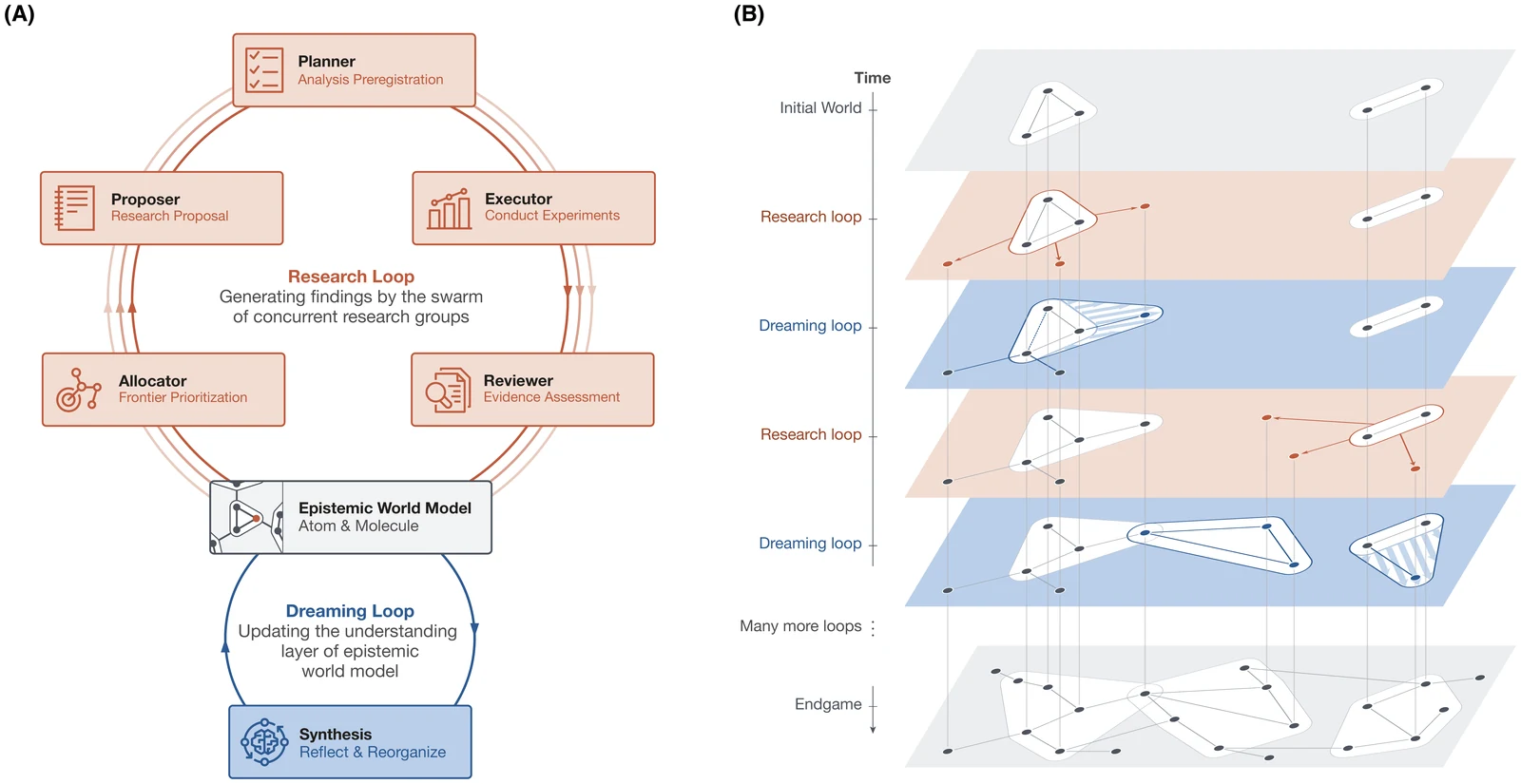
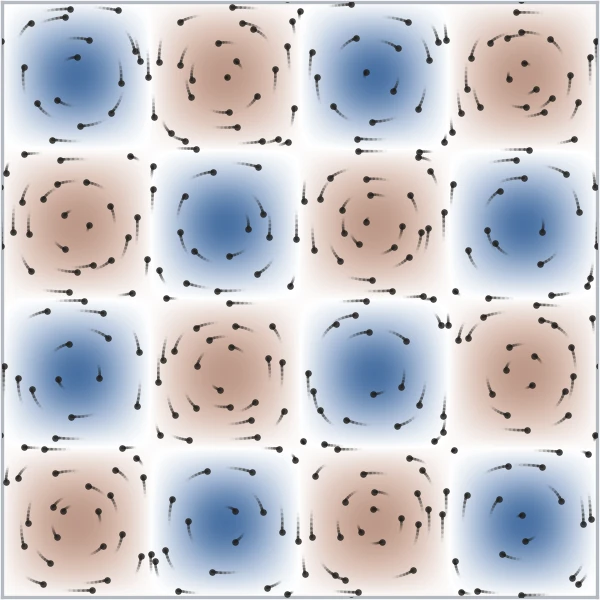
Figure 1 of the Bolero manuscript: the research loop and the dreaming loop around the epistemic world model, and how the world model grows over time.
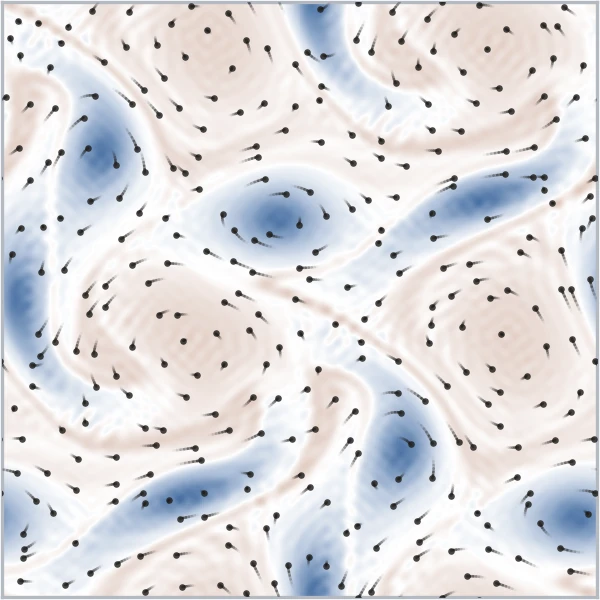
A Taylor–Green vortex at time 100: a regular array of vortices that rotate in alternating directions.
time 100
The same run at time 1200: the array has broken up into stretched, irregular vortices.
time 1200

From the physics case study: a Taylor–Green vortex in a compressible fluid with odd viscosity, at two times of the same run. Brown is counterclockwise rotation, blue is clockwise.

Working paper

Bolero: An Open Framework for the Co-Evolution of Findings and Research Programs

Erzhuo Shao, Yifan Qian, Ege Eren, Zihang Lin, Yue Bai, Dashun Wang

Open-ended research advances through the co-evolution of findings and research programs. Programs pose questions, findings answer them, and the answers reshape the programs that set the next questions. Current AI scientists rarely implement this co-evolution.

Bolero is an open framework in which findings and research programs co-evolve autonomously, so that what is known directs what is explored next. A research loop produces findings, and a dreaming loop integrates them into research programs whose open directions guide the next questions. We examine Bolero in case studies in the science of science and in physics.

Working paper

Shared Leadership in Science

Erzhuo Shao†, Giorgio Tripodi†, Yifan Qian, Dashun Wang († equal contribution)

Science policy increasingly promotes team-based research and faculty collaboration through multi-PI grants, centers, and cross-disciplinary initiatives. Yet the evidence guiding these efforts is based almost entirely on authorship teams, which capture contributions but not leadership.

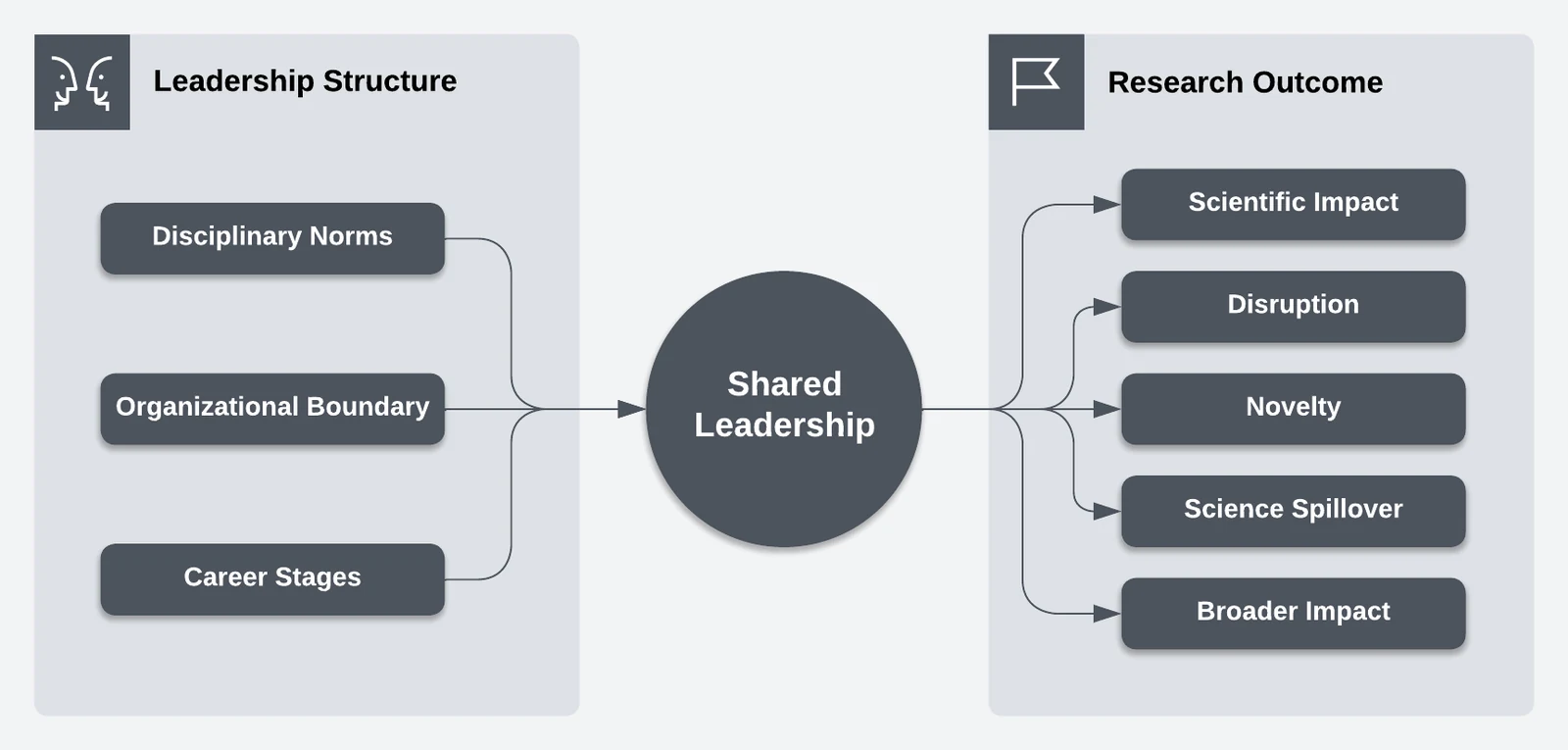
By distinguishing faculty from non-faculty members on publications, we provide a large-scale analysis of shared leadership in science, and of how papers co-led by several faculty members differ in citations, novelty, disruption, spillover across disciplines, and attention beyond academia.

arXiv, 2026

Figures as Interfaces: Toward LLM-Native Artifacts for Scientific Discovery

Yifang Wang, Rui Sheng, Erzhuo Shao, Yifan Qian, Haotian Li, Nan Cao, Dashun Wang

In most human–AI collaborations, figures are still treated as static visual summaries. Once rendered, they are images to be re-interpreted from pixels or captions.

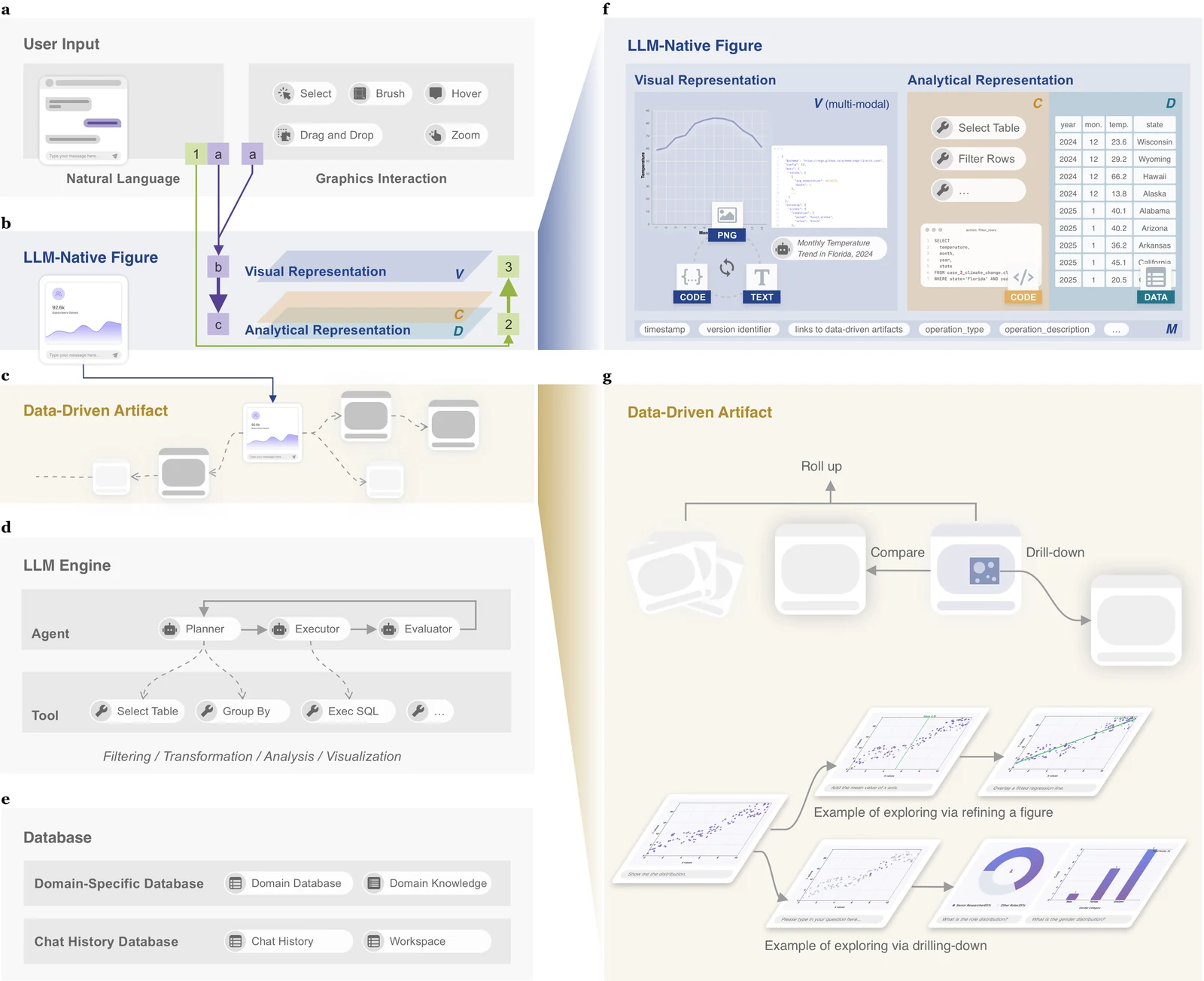
We introduce LLM-native figures, data-driven artifacts that are both human-legible and machine-addressable. Each one embeds its provenance, namely the data subset, the analytical operations and code, and the visualization specification that generated it. This redefines the figure not as an end product but as an interface for discovery.

PNAS, 2026

The Rise of Large Language Models and the Direction and Impact of US Federal Research Funding

Yifan Qian, Zhe Wen, Alexander C. Furnas, Yue Bai, Erzhuo Shao, Dashun Wang

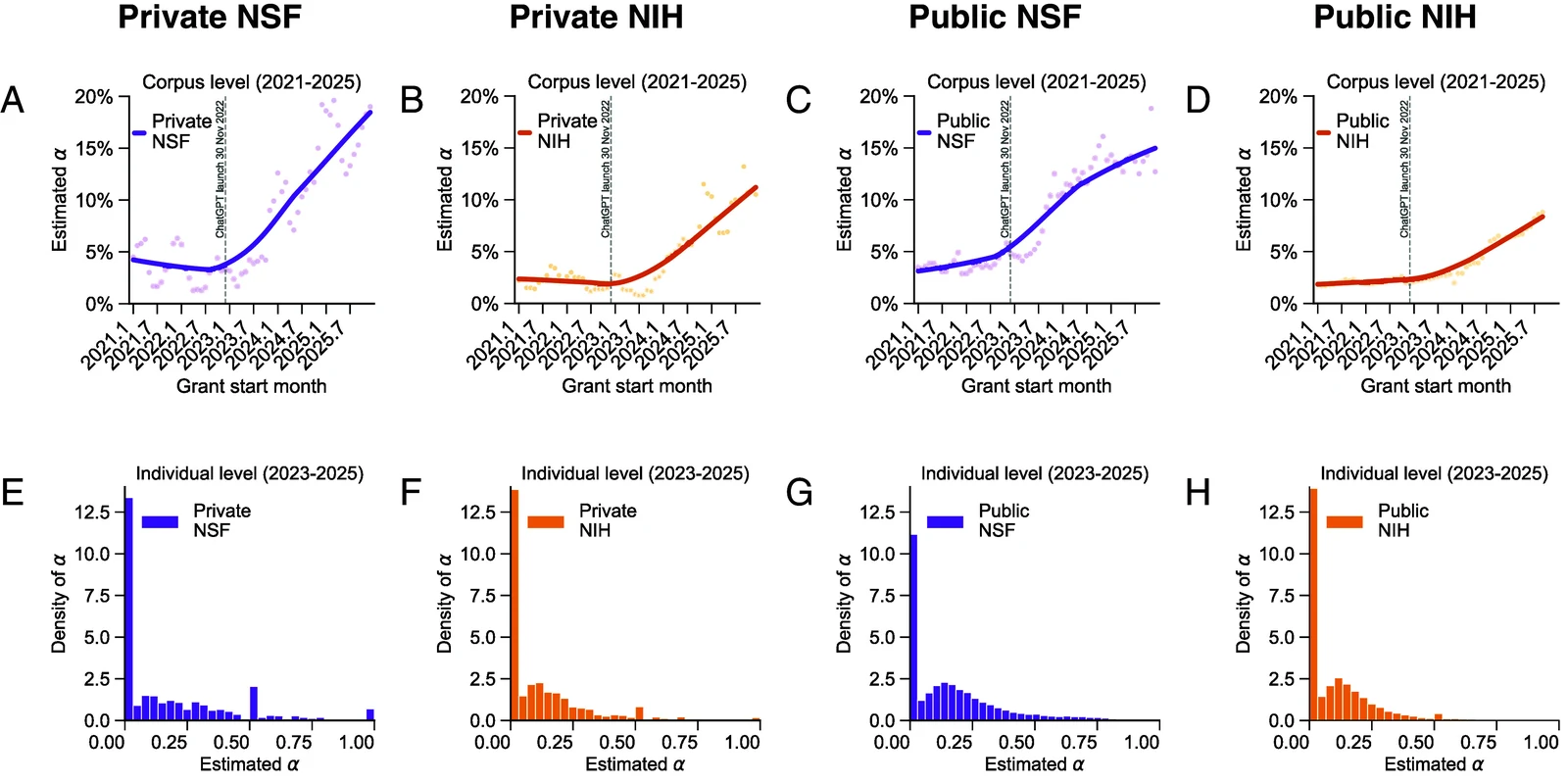
Federal research funding shapes the direction, diversity, and impact of the US scientific enterprise. We examine the involvement of large language models (LLMs) in the federal funding pipeline, using confidential NSF and NIH proposal submissions from two large US R1 universities and the full population of publicly released NSF and NIH awards.

LLM use rises sharply beginning in 2023 and is associated with lower semantic distinctiveness, positioning projects closer to recently funded work within the same agency. At NIH, LLM use is positively associated with proposal success and higher early-stage publication output, whereas no comparable associations are observed at NSF.